

تعد Sweet Bonanza و Gates of Olympus من أبرز نجاحات pragmatic play.
Skip to the content

Balancing a checkbook might seem like an outdated skill in today’s digital age, but it’s a crucial financial habit for young graduates entering the workforce. Understanding how to track expenses, manage a budget, and ensure accurate account balances can prevent overdrafts and financial stress. Here’s a brief, basic guide to help new graduates master the art of balancing a checkbook!
Understand the Basics
Balancing a checkbook involves recording all transactions that affect your checking account balance. This includes deposits, withdrawals, checks written, debit card purchases, and any fees or interest applied to the account. The goal is to keep an accurate record so you always know how much money you have available.
Gather Necessary Tools
To get started, you’ll need a few basic tools:
Record Transactions
Each time you make a transaction, record it as soon as you can. This includes writing down the date, description, and amount of each transaction. If you’re using a checkbook register, there are columns for each of these details. For digital tracking, a spreadsheet or financial app will have similar fields. Consistently recording transactions helps you stay on top of your finances and prevents missed entries.
Compare Your Records to Your Bank Statement
At the end of each month, compare your recorded transactions with your bank statement. Check off each transaction that matches between your records and the statement. This process helps identify any discrepancies, such as forgotten entries or unauthorized transactions.
Adjust for Outstanding Transactions
Sometimes, transactions might not appear on your bank statement immediately. These are called outstanding transactions. Common examples include checks that haven’t been cashed yet or recent debit card purchases. Make a note of these outstanding transactions and adjust your balance accordingly. Subtract outstanding checks or add deposits that haven’t cleared to your checkbook balance.
Reconcile Your Account
After accounting for all transactions, compare the adjusted balance in your checkbook with the ending balance on your bank statement. These two figures should match. If they don’t, double-check your entries for any errors, such as transposed numbers or missed transactions. Correct any mistakes and recalculate the balance until both totals align.
Monitor Regularly
Balancing your checkbook isn’t a one-time task. Make it a habit to record transactions and reconcile your account regularly. Doing so weekly or bi-weekly can prevent small errors from becoming significant issues. Regular monitoring also helps you stay aware of your spending patterns, making it easier to manage your budget and save money.
Use Technology to Your Advantage
While traditional checkbook balancing is manual, leveraging technology can simplify the process. Many banks offer apps that automatically categorize transactions and provide real-time balance updates. Personal finance apps like Mint or YNAB (You Need A Budget) can also help track expenses and budgets, providing a digital checkbook register.
Balancing a checkbook might seem tedious, but it’s a valuable skill for financial management. By understanding the basics, recording transactions diligently, and regularly reconciling your account, you can maintain control over your finances. For new graduates, mastering this skill will pave the way for responsible financial habits and a more secure financial future.
–
Written by Jack Vale

Frances Harder – Fashion for Profit Consulting
The history of the Patchwork Quilt, or at times referred to as simply quilting can be found in many cultures going back to ancient Egypt, ancient and medieval India, and Chinese civilization among many other cultures. The word “quilt – can be linked to the Latin word “culita”, meaning a type of cushion that seems to have been first used in England in the 13th century. There are many examples of this very sustainable artistic form of upcycled expressionist. The patchwork tradition is found in many different cultures that go way back to ancient times and have derived in many separate forms of expressionism in these very remote cultures. Bedouin women joined fabrics strips together to make tents. West Africa patchwork can be found made into umbrella and ceremonial clothing for festive occasions. Patchwork quilts were also made to be included in the trousseau of Indian brides and battle dress of North Africa warriors.
Although the many forms of patchwork art is global, the American pioneer women of the 19th Century have won the fame of achieving its place as maybe having the honor of being the richest. But there are many other cultures that have also created their own patchwork art form. My big favorite is the Mole– reverse applique from Cuna Indians, San Blas Islands. The Bottle top quilts are also amazing examples of the intricate art of recycling fabrics.
1. Traditional Patchwork: This involves sewing together fabric pieces to create geometric patterns or designs. Common techniques include piecing squares, triangles, and rectangles together to form blocks, which are then assembled into a quilt top.
2. Crazy Quilting: Originating in the Victorian era, crazy quilting involves stitching together irregularly shaped fabric pieces in a random or asymmetrical manner. Embellishments such as embroidery, lace, beads, and ribbons are often added to enhance the design.
3. Appliqué: In appliqué patchwork, fabric shapes are cut out and stitched onto a background fabric to create decorative motifs or designs. Appliqué can be done by hand or machine and allows for endless creativity in incorporating various fabrics and shapes.
4. English Paper Piecing: This technique involves basting fabric around paper templates and then hand-sewing the pieces together along their edges. It’s commonly used for intricate designs with small pieces, such as hexagons or diamonds. (Bottle Top uses this technique)
5. Foundation Piecing: Also known as paper piecing or flip and sew, this method involves sewing fabric pieces onto a paper or fabric foundation. It’s particularly useful for achieving precise angles and complex designs.
6. Improv Patchwork: Improvisational patchwork encourages free-form design and spontaneous piecing without the use of patterns or templates. It allows for experimentation with color, texture, and shape, resulting in unique and modern quilt designs.
7. Quilt-As-You-Go: This technique involves quilting individual blocks or sections separately and then joining them together. It’s a great option for quilters who prefer to quilt smaller sections at a time or want to simplify the quilting process. This method is often used in knitted patchwork. Crochet quilts can also be created through this method.
8. Strip Piecing: In strip piecing, fabric strips are sewn together to create larger units, which are then cut and rearranged to form blocks or quilt tops. It’s an efficient method for creating quilts with repeating patterns or designs.
9. Fusible Appliqué: Similar to traditional appliqué, fusible appliqué involves adhering fabric shapes to a background fabric using fusible web instead of stitching. It’s a quicker alternative that’s often used for appliqué projects with simple shapes.
10. Patchwork Embellishments: Beyond traditional patchwork techniques, embellishments such as fabric painting, stamping, or stenciling can be incorporated to add unique details and textures to patchwork projects.
Each type of patchwork offers its own set of techniques, challenges, and opportunities for creative expression, allowing quilters and crafters to explore a wide range of artistic styles and aesthetics.
Many retailers are working to include recycling and to eliminate plastic waste with non-plastic use. One of the newest retailers to embrace this in-depth topic is IKEA, who is collaborating to promote Eco use of recycling/upcycling with Nigel Xavier who has designed and created patchwork clothing and patchwork coverings for chairs and other furniture. Then Nasim Lahbichi, who created plant-based IKEA dishes. So, we are entering another period of the art of patchwork.
These are some of the very exciting and innovating actions being introduced to try and prevent the massive textile and clothing waste that is discarded Globally. The results of which are not only polluting our earth but the amount of plastic waste that is discarded and then the billions of plastic particles are poisoning our fish and livestock, plus causing all types of cancer in humans. Hopefully, things will change for the better!
Here are a few of my own patchwork quilts in my possession. I have to say my big favorite at the Moles from the Cuna Indians from the San Blas Islands. Incredible hand work that are sewn by these native Indians using reverse Applica. Cutting a design and sewing contrast fabric below. I fell in love with their amazing work when sailing around their islands. I could not stop myself from investing in quite a few of which I have framed some and made cushions from others.



In the fast-paced world of fashion, where creativity meets commerce, the importance of cybersecurity can often be overshadowed by design and marketing concerns. However, as the industry increasingly embraces digital platforms for design, production, and sales, it becomes a prime target for cyber threats. In this article presented by Fashion for Profit, we’ll explore essential strategies for fashion businesses to safeguard their digital assets, ensuring that their flair for fashion isn’t dampened by digital disasters.
The first line of defense in cybersecurity is awareness. Regular training for all employees in cybersecurity best practices is crucial. This should cover the basics of secure password practices, recognizing phishing attempts, and safe internet usage. Since the fashion industry often involves a mix of permanent staff and freelancers or contractors, it’s vital to ensure that everyone, regardless of their role, is well-informed about the risks and their responsibilities.
Cybersecurity training should be an ongoing process. New threats and vulnerabilities emerge regularly, and employees must be prepared to recognize and respond to them. Training sessions can be conducted in-house or by hiring cybersecurity experts to provide workshops and seminars. Moreover, it’s important to tailor the training to the specific roles within the fashion industry. For example, designers should be educated about the risks associated with sharing design files online, while retail staff should focus on secure point-of-sale practices.
Fashion houses and retailers often overlook the security of their Wi-Fi networks. Secure Wi-Fi networks, especially in public or shared spaces like showrooms or retail stores, are critical. Implement encryption protocols like WPA3 to protect sensitive data transmitted over these networks. Additionally, sensitive data stored on computers and servers should be encrypted to prevent unauthorized access, even in the event of a breach.
Public Wi-Fi networks are notorious for their lack of security. When fashion professionals travel for events, they often connect to public Wi-Fi in hotels, airports, or cafes. This convenience can be a double-edged sword, as cybercriminals can easily intercept data on these networks. Therefore, employees should be trained to avoid using public Wi-Fi for work-related tasks unless they are connected via a virtual private network (VPN) that encrypts their internet traffic.
The fashion industry is no stranger to the ever-changing landscape of cybersecurity threats. To stay ahead, professionals in the field should remain informed about the latest threats and trends. One innovative approach is to explore online cybersecurity programs offered by reputable online universities. This commitment not only cultivates in-depth expertise within the organization but also showcases a dedicated commitment to digital security.
In addition to online cybersecurity programs, attending cybersecurity conferences and webinars, subscribing to industry-specific cybersecurity publications, and actively engaging in relevant forums or communities can further empower fashion professionals to stay updated on the latest threats and best practices. Networking with cybersecurity experts also opens doors to valuable insights and knowledge-sharing opportunities.
Implement strict access controls to limit who can access sensitive data. This means setting up user permissions and roles within your IT systems to ensure that only authorized personnel have access to critical information. For instance, design files, customer databases, and financial records should not be universally accessible. Using multi-factor authentication can add an extra layer of security.
Furthermore, you should regularly review and update access permissions. When employees change roles or leave the organization, their access should be promptly adjusted or revoked. Failure to do so can result in unauthorized access and potential data breaches.
Regular security audits and assessments are like the critical reviews of a new collection; they help identify potential vulnerabilities in your systems. Engaging external cybersecurity experts to conduct these audits can provide an unbiased view of your security posture. These audits should cover everything from network security to employee access protocols.
Security audits typically involve a comprehensive examination of your organization’s cybersecurity infrastructure and practices. This includes vulnerability scanning, penetration testing, and a review of security policies and procedures. The findings from these audits can help fashion businesses prioritize security improvements and allocate resources effectively.
Despite the best preventive measures, cyber incidents can still occur. Developing and regularly updating an incident response plan ensures that your business can respond quickly and effectively to mitigate damages. This plan should include steps for isolating affected systems, communicating with stakeholders, and reporting breaches to relevant authorities.
An incident response plan ensures that employees know what to do in case of a cybersecurity emergency. It should outline the roles and responsibilities of individuals involved, including IT staff, legal counsel, and public relations personnel. The plan should also specify the steps for notifying affected parties, like customers, and comply with any legal requirements for data breach reporting.
Regularly backing up data and systems is like having a backup for your runway show — crucial for when things don’t go as planned. Ensure that backups are made frequently and stored securely, ideally off-site or in the cloud. This practice not only protects against data loss from cyberattacks but also from physical threats like fires or floods.
Backups should be automated whenever possible to ensure consistency and reliability. Fashion businesses should consider using a combination of on-site and off-site backups to minimize the risk of data loss. Regularly testing the restoration process ensures that backups are functional and can be relied upon in case of a data disaster.
Cybersecurity in the fashion industry is non-negotiable. It’s not just about safeguarding data; it’s about preserving brand reputation, customer trust, and the essence of creativity that fuels the industry. By implementing these strategies, fashion businesses can not only defend themselves against cyber threats but also gain a competitive edge in an industry where reputation and trust are as vital as the latest trends.
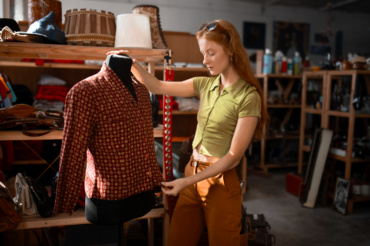
Let’s dive into the world of upcycling – the art of transforming old, worn-out stuff into hip, trendy treasures. If you’ve got a closet full of clothes hanging on for dear life or a piece of furniture that’s seen better days, it’s time to channel your inner DIY maestro. Here are a couple of cool ideas to turn your tired threads and furniture relics into something Instagram-worthy!
Upcycling Clothing Ideas:
1. Denim Revival
Got a pair of jeans that have more holes than fabric? Fear not! Cut them into shorts, add some funky patches, or turn them into a denim tote bag. Denim is like the duct tape of the fashion world – it fixes everything and can be molded into anything. With a bit of creativity and a sewing machine, those old jeans can become your new style statement.
2. T-shirt Transformation
We all have that stack of old t-shirts we can’t bear to part with. Time to break out the tie-dye kit! Whether you go for classic spirals or channel your inner artist with abstract designs, tie-dyeing turns plain tees into vibrant, one-of-a-kind masterpieces. Pro tip: Oversized tie-dye shirts make for perfect loungewear or beach cover-ups.
Upcycling Furniture Ideas:
1. Pallet Power
Pallets are like the Lego bricks of the furniture world. With a bit of sanding and a splash of paint, you can turn these humble shipping platforms into coffee tables, bookshelves, or even outdoor seating. Get creative – stack them, paint them, and voila, you’ve got yourself a custom piece of pallet perfection.
2. Suitcase Shelves
Have an old suitcase gathering dust in the attic? Turn it into a quirky set of shelves! Just attach it to the wall, open it up, and boom – instant storage with a vintage twist. The best part? You don’t need to be a carpenter extraordinaire to pull it off. It’s the kind of DIY project that’s easy, fun, and earns you major style points.
Upcycling is not just about saving money; it’s about giving new life to the things you already own. So, grab those scissors, raid your closet, and get ready to turn the ordinary into the extraordinary. Whether you’re rocking revamped denim or showcasing your DIY furniture finesse, upcycling is all about embracing the beauty of imperfection and making sustainability look seriously cool. Happy crafting!
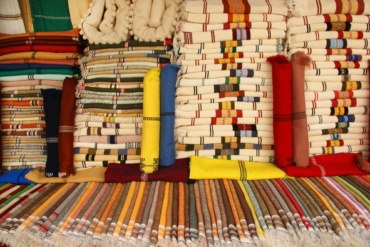
When it comes to fashion and textiles, the origin of your clothing can be as important as the style itself. In recent years, there has been a growing interest in supporting local industries and choosing products that are made in the USA, as opposed to items made in bulk in factories abroad. If you’ve ever wondered about the fabrics that make up your favorite American-made garments, you’re in the right place!
One notable trend is the increasing emphasis on sustainability and ethical practices within the industry. This shift has led to a resurgence of interest in domestically produced fabrics, with both consumers and businesses recognizing the benefits. In the quest for sustainable fashion, consumers are increasingly seeking out fabrics with a lower environmental impact. This aligns with a broader movement toward mindful consumerism and a desire to make environmentally conscious choices.
Cotton and denim: Staples in American Textiles
Cotton has long been a staple in the American textile industry, and it continues to play a crucial role today. Companies like Red Land Cotton are leading the charge for American-produced cotton. Their products highlight the importance of supporting local cotton farmers and the communities that depend on this age-old crop.
Denim is another notable textile that is proudly made in America. With a rich history dating back to the 19th century, American denim has become synonymous with quality and craftsmanship, often selling for a high price to consumers. The iconic blue denim jeans, a wardrobe staple for many across the world, often find their roots in the denim mills scattered across the United States.
Technical Textiles and Innovation
Apart from traditional fabrics, the U.S. textile industry has seen a surge in the production of technical textiles. These advanced materials are engineered for specific functionalities, ranging from medical applications to industrial use. This shift towards innovation ensures that the American textile industry remains at the forefront of global competition, staying a step ahead of competition.
By choosing garments made from fabrics produced in the USA, consumers can not only embrace a sense of patriotism but also contribute to the sustainability and resilience of the American textile industry.
Written by Jack Vale in partnership with Arena Prints screen burning services.

Decades after stepping onto the proverbial runway of her career calling, Frances J. Harder is still making multiple strides motivated by her personal motto, “Passion for fashion.” Heavily influenced while growing up by her father, a textile engineer, and her mother, a fashion designer for her uncle who owned a factory, Ms. Harder initially planned a career in graphic design, yet her mother implored her that pursing fashion design would ensure that she’d always know how to sew for her children. Heeding the advice while weaving in a solid educational foundation earning a Bachelor of Arts in fashion, with honors, from the University of Salford, in the United Kingdom, today, Ms. Harder is a curriculum advisor of fashion programs and an adjunct professor at California Polytechnic State University as well as the founder, president, and owner of Fa$hion for Profit Consulting in California.
Ms. Harder thrives in the fashion and education arenas, bolstered by her professional mission to make a difference by educating people and consulting with others working in fashion to make running their businesses less stressful. She has advised numerous colleges, which has included sitting on the dean’s advisory board for the merchandising department at California Polytechnic State University. With an expert’s eye, she provides clients and students with wise, helpful overviews and insights into the latest happenings in the fashion industry as it relates to design, product development, marketing, manufacturing, and most everything that goes into producing garments. Ms. Harder’s prowess has garnered widespread respect, including the distinction of being consistently named to the Los Angeles’ Most Influential People list in California Apparel News, TLM Publishing Corp., between 2000 and 2018.
Having established deep and longstanding relationships at all levels in the industry, she is a consultant with the International Trade Centre, the World Trade Organization, the United Nations, and an apparel business and design consultant with various companies in England. Ms. Harder also serves as an expert witness regarding industry-related issues such as chargebacks, trademarks, copyrights, trade dress, trade secrets, patent infringement issues, and research and development. As a designer, she was tapped to produce two fashion lines for Priscilla Presley working with the Home Shopping Network.
During the past 20-plus years, Ms. Harder has shared her knowledge through creative works in the United States, England, Canada, Nepal, Peru, Egypt and other worldwide locations and as either a presenter, organizer, or moderator at various national and international trade shows. They include, yet not limited to, MAGIC International, the Apparel Textile Sourcing Show, Hong Kong World Boutique, the LA Textile Show, Phoenix Fashion Week, Emerald Exposition, ASD Market Week, and others. Furthermore, as an authority, Ms. Harder educates the public through her own Harder Publications company, which has published titles that she has authored such as “Costing for Profit,” “Fashion for Profit: From Design Concept to Apparel Manufacturing and Retailing – A Professional’s Complete Guide, 10th Edition,” “Brand Building for Profit,” and the “Forms for Profit,” CD-ROM.
Ms. Harder’s extensive experience spanning four decades prepared her well for her current roles. A mere sampling of her previous positions has been as an adjunct Professor at Woodbury University, a consultant with the training center at Microsoft, associate professor at the Otis College of Arts and Design, a freelance technical designer and fashion designer for various entities, designer of her own junior contemporary fashion line, department chair for the fashion program at The Art Institute of California, a faculty member at the Fashion Institute of Design & Merchandising, and many other key positions in the U.S. and abroad. Merging her profession with civic responsibility, Ms. Harder was the founder and president of Fashion Business Incorporated for 18 years and a member of the District Export Council of the Federal Trade Commission for six years. She also often donates to charities.
Ms. Harder believes her success is the result of enjoying her work, being open to networking, her willingness to change especially when opportunities arise, recognizing opportunities and striving to do her best to make them work for her and others. Peering forward, she expects to continue consulting with new companies to help them flourish, conducting seminars, and serving as an expert witness for industry-related legal issues.
While proud of her accomplishments, most important to Ms. Harder is her family. She is married with two grown, professionally successful children and has two grandchildren. In her personal time, she paints, presents art exhibitions, and exercises.

A question I have been asked repeatedly over the years is about working with patternmakers.
By Frances Harder
Fashion for Profit Consulting
When interviewing a potential patternmaker, it is a good idea to ask for references and to see examples of finished samples they have produced. To be able to translate a two-dimensional sketch into a three-dimensional garment, a patternmaker needs to have developed an eye for design. Their finished work will speak for itself, giving you an idea as to their standard of work and their interpretive skills. Don’t try and cut costs with this critical part of producing your line. Like all professions, there are good patternmakers, and then there are … others.
Professional patternmaking services usually have a pay scale as to how long it will take to make a particular pattern. For example, jackets would cost more than blouses, and a skirt would be priced less than a pair of pants. The price is usually set for certain types of garments. A simple skirt could cost around $125, but a fully lined jacket could be as much as $700. Denim jeans may cost the most as they need two sets of specifications made for the pre-washing measure and the post-washing measurements.
When negotiating with the patternmaker for their rate of pay, you need to find out if they will make adjustments to the pattern, should you find it to be unsatisfactory. One or two (at the most) pattern adjustments are normal and should be included in the cost of making the pattern. If, however, it’s your mistake because you changed your mind about any details, then you will be responsible for having the pattern remade at your expense. Therefore, it’s essential that you know exactly how you wish the finished garment to look. This should include all the stitching details, down to the number of buttons, the size and placement. Patternmakers should not be put into a position where they have to guess what the designer/manufacturer ultimately wants. They must be able to fully understand your design to translate the flat sketch into an actual garment. A flat (technical drawing) of the clothing is sketched with finished dimensions and sewing details, such as topstitching and zipper length.
If you’re trained in draping and patternmaking, then making your own first patterns will, obviously, save you a great deal of money. It is also more likely that you’ll achieve your vision of how you would like your finished garments to look and be produced. Having to have your samples remade several times before it’s to your satisfaction can be costly.
The contractor that you plan to use for your production can often also make your first samples. This has the added advantage of the contractor being able to cost the garment for production. Contractors usually like to sew the first sample, as they hope that they will then be ready to sew your production orders. Using this method allows the contractors to become aware of any problems involved with sewing a particular style, and it enables them to give a fair estimate of the costing. As a rule of thumb, sewing the first sample is usually two to three times the price of sewing a garment in production. Frequently, good patternmakers are working with different types of sewing contractors for your production needs.
Word of caution: Once you have paid for the work, then you own the patterns. If the patternmaker keeps the patterns, you need to ask for a printout of the patterns for your own records. You should have a “Work for Hire” contract with your patternmaker.
In the copyright law of the United States, a work made for hire (WFH) is a work subject to copyright that is created by an employee as part of his or her job, or some limited types of works for which all parties agree in writing to the WFH designation. Generally, the person who creates a work is considered its “author” and the automatic owner of the copyright in that work. However, under the work made for hire doctrine, your employer or the company that has commissioned your work, not you, are considered the author and automatic copyright owner of your work.
Lastly, I would like to recommend that you checkout Icrest as a marketplace is proving to be a boon in today’s scenario of business situations, helping consultants to sell their business tools and earn passive income. At the same time helping users to get available industry driven business tools at a affordable rates
For more industry focused advice on our rapidly changing industry with any aspect of your apparel or textile business please check out our new platform: www.fashionforprofit.com. We have our professional finger on the pulse of the many changes that are affecting both manufacturing and retailing platforms. If you are an industry consultant, or offer resources, we invite you to list your qualifications and your industry specialty under Consultants on our website. There is a nominal annual fee of $200 but if you sign up through this article, we will give you a $50.00 discount if you use the code: FFPSamples . We have a new updated data base of approx. 15,000 that is industry focused. We also invite any experts to pitch a topic to be a presenter of our new proposed podcasts, or to present a topic at the many industry trade shows we are invited to present.
Fashion For Profit Consulting will be back once again presenting a variety of relevant topics for MAGIC Sourcing online in September through November, to present daily seminars that are industry focused seminars. So, please do check out our new platform and connect with our team!
Please do not hesitate to contact us if you have any questions, comments, or concerns!
Sincerely,
Frances Harder
President/Founder
Fashion For Profit Consulting
frances@fashionforprofit.com
www.fashionforprofit.com

By Frances Harder
The apparel industry is at a very crucial cross road. The massive amounts of unsold new clothing end up as waste, and old discarded clothing also end up in a landfill or burned is staggering. Approximately, only twenty five percent of all clothing in stores are sold at full retail price and the rest are either discounted or destroyed. Of course, what we wear is important for us all but most of us in the western world have more than enough clothing in our wardrobes. Women are the biggest consumers of fashion purchasing and often buy more for a reward than a real need for a new sweater.
Globally the fashion industry employs 60 million people and generates trillions in revenue, but all are at risk. Production issues and land to grow cotton or farm is under dire stress due to the limit of planetary resources like water. Additionally, consumers are asking for more sustainable methods of production, however for the most part consumers don’t seem to be willing to pay more for garments made in any sustainable practice. Additionally, globally apparel workers are demanding safer conditions and higher wages, which of course they have every right to demand. But obviously higher wages equal higher costs for goods to the consumer. All of the above issues mixed with the weakening of any dictated fashion trends are also a perplexing issue for apparel manufactures. So, what is the solution?
In my mind I see that the future of fashion will be the evolution of the new world of the technical advancements in 3D printing. To explain 3D printing simply, because it is a complex process that transforms digital information into an electronic design file. Guided by a design file, a 3D printer lays down layer after layer of raw material to “print” out an object. It could be a shoe, or a handbag, or as this technology progresses and evolves clothing of all types. I am convinced that 3D printed garments will be the next evolution that will be widely available to all and change the world of fashion and bricks and mortar. Retailers are closing as more purchases go online but maybe this new process will open up more doors. A customer can go to a store and choose a design from files or samples. Then have your body scanned to achieve the perfect fit and you can also even see a 3D image of yourself wearing your new outfit. Then the next day your dress will be shipped. Once you have finished with your old 3D printed garments then you can return them to the store to be melted down and reuse! NO WASTE!! ?
Stella McCartney, the clothing designer and daughter of Paul is a leader and groundbreaker in the use of 3D printing in the world of fashion. She has showcased her 3D designs on the runway and you can find her clothes and shoes to purchase from her website, or another good place is “Farfetch”. You can even print your very own Paul McCartney. I look forward to seeing more innovation in fashions from Stella! Big shoe brands are also 3D printing their new footwear models.
3D is also being used in many other industries including the medical field & the building trade. 3D is also breaking new ground and is being used to print bones, organs and other body parts. The building trade is 3D printing walls and other construction parts! Just amazing!! Very exciting! Watch this space.