chicken road avis aviator олимп казино best non gamstop casino non gamstop casino uk

تعد Sweet Bonanza و Gates of Olympus من أبرز نجاحات pragmatic play.

Categories
Blogs

Unlocking the Secrets of a Fashion Cost Sheet: Everything You Need to Know for Successful Product Pricing

‘Look after the cents and the dollars will take care of themselves’

Why does a dress cost $300? Is a cotton shirt worth $75? The sticker price of that dress you’re considering or the shirt you are saving for can depend on the complexity of the design, the status of the label and whether the clothing is made overseas or domestically. What goes into the clothes you buy can sometimes make the sticker price as high as a luxury vacation or as low as a pizza and a movie. The answer is layered in the long, complex journey a garment makes in the process of creation, production, testing and shipping that brings it, finally, to the retail store. It also reflects the retailer’s overhead costs, for security, real estate, technology, etc.

Understanding how to correctly cost a garment will be the key to your company’s success. One small miscalculation can be devastating to your profit margins and could undermine the survival of your start- up business. Once you have determined the market and price bracket that your company will be in, you will have to strive to maintain the quality of styling and construction within the set price structure. For a small start- up company it is very difficult to be competitive with bigger manufacturers in moderately priced and budget clothing. Unless you are investing a few hundred thousand to start your company, the higher price category is usually the best place to start. There is a higher profit margin to the manufacturer and to the retailer in ‘betterwear’. Granted the orders will be smaller, but it is hard to find financing for large orders when you are a start-up company. Most start-ups will not be able to afford to produce large quantities at first, without borrowing money. Start with small orders. When mistakes are made it will not be too devastating to the company both financially and emotionally. You will be able to learn by your mistakes.

Major Costs

The major costs involved in manufacturing any garment are fabric, trims, labor, and operational costs. Becoming familiar with labor costs takes experience in understanding the over-all work involved in the completion of the garment. Direct labor for sewing will be negotiated with the contractor. Marking and grading may be done by one company, cutting done by another, (or in some cases) your contractor may be able to take care of all these steps in producing your product. All these costs must be calculated by the number of garments made. For smaller orders there will be a higher price to pay. The more garments sold or the bigger the order, then the labor price decreases. Other labor costs to be considered are design development, first patterns, production patterns, quality control, bookkeeping and shipping. Overhead costs or fixed costs should not be forgotten including rent, electricity, etc.

Chargebacks & Markdown Refunds One of the more controversial factors in apparel prices  is  retailers’  request  for  ‘chargebacks’ or  ‘markdown’  money.  Chargebacks  can  be demanded by a store for late deliveries or for a variety of other reasons. If too few garments sell at full price, sometimes department stores go back to the manufacturer to ask that they share in the losses from discount sales. Ironically, markdown money, or credit demanded by a retailer adds to the manufacturer’s overhead costs and may boost the original retail price of the garment. Another cost that retailers expect the manufacturer to share is the cost of advertising, promoting the product in store flyers and newspaper advertisements.

Smaller specialty stores  are  less  likely  to make such requests, but they have less buying power with the manufacturer. Markdown and chargebacks have become a very sensitive issue

and many manufacturers are refusing to do business with larger department stores because of this problem. The wise manufacturer calculates both of these into the costing of the garments

Importance of Correct Costing Incorrect costing can result in losses that will eventually bankrupt the company. If the costing for cutting, sewing, or trims is incorrect, or if the yardage has been under-calculated, then the costing for that garment will result in major losses. Costing is done before the orders are written so it can be difficult to calculate how big the order will be. Therefore, it is important that start-up companies project the size of production and the money available to produce the orders. You could be out of business in a very short time without an experienced costing person filling in the cost sheets. It is also crucial to have an accurate fabric yield and a precise production cost. Never guess your costs!

Market Research

When starting a new company, it is important to assess the market, shop your  competition and find out the critical price points of similar products in the market place. To cost products too high could mean no orders and to charge too little could result in no profits. Know the three stages of costing:

  • ‘Actual cost’ of production: This is more or less a fixed price and can only be reduced by modifying or changing the garment.
    • Cost plus your markup percentage: Deciding on the mark-up will be determined by a couple of factors: How much do you need to make in order to make a profit? What will the market price will bear?
    • Retail-selling price: Having a realistic understanding of the price structure of the market place will help when costing.

Costing for the Start-Up

A simple method of costing for start-up manufacturers is to make the price you sell to the retailer at least twice your cost. This should give you a 100% mark-up, which is a necessary profit

margin when you first begin to manufacture and have small orders. The term used for this is ‘keystoning’. However, be careful for any hidden costs. This method is not the most reliable or accurate.

Example If your basic cost is $20, you will sell your garment for $40. This is ‘keystoning’ which equals a 100% mark-up. If you go back from the

$40 to the cost price of $20, that will equal a 50% gross profit margin. Understanding these basic terms will help you understand how they should be used.

Never go below 35% gross profit margin, or you will be giving the garments away! Subjective thinking will come into play sometimes when you have to take a smaller mark-up on the pricing of certain styles in order to keep a group together. Hopefully, this will make the group more saleable. Conversely, there will be times when you will mark-up a garment more than 100% to keep the garment in the correct price category. If you do reduce the profit by lowering the wholesale price of a garment, make sure that if the garment sells well and the store wants to reorder, you then adjust the price higher. If not, you may find that this garment will end up losing money for you season after season. Only compromise the cost of a garment if it is to keep a group together and you feel that removing it would harm the overall sales of the group. Your goal is to try and keep the garment at the right price point for maximum sales and profit. To do this you may have to rework the particular garment with the production pattern maker to make it fall in the right price range.

Mass Production

For manufacturers producing mass production on a large scale, the mark-up percentage is usually smaller and pricing more competitive, due to the large quantities produced. They can safely work with a 30% profit margin – you cannot! Retailers such as Forever 21, The Gap, Old Navy, Banana Republic, Limited and Ann Taylor have a price edge because they can deliver their goods directly from the factory to the public without the independent middleman. This is known as

vertical production or manufacturing.

(Discount chains such as T.J.Max, Ross or Marshall’s usually take lower profits in place of such perks as sales help, personal shoppers, carpets and fancy dressing rooms. Manufacturers often have discounted goods left in stock after the season is finished that needs to be moved rather than added to their inventory Discount chains can buy this merchandise at a low cost for sale in their stores ).

Custom Made Clothing

When costing a ‘one-off’ garment it is important to establish an hourly worth of the designer/ producer. Only when you know this can you begin to estimate the costs involved of producing a unique, one-of-a-kind, wearable piece of art.

Once you have established your hourly worth, double it and add it to all other expenses. This will give an approximate cost of the wearable art piece. If the custom- made piece has been commissioned, it is a general rule to ask for fifty percent up-front, since it is often impossible to sell to anyone but the original buyer. If you know the buyer, it may not be necessary to ask for fifty percent up front, but otherwise protect yourself from being left holding an unclaimed garment. To guarantee payment upon completion, finished pieces may be shipped either COD or Pro forma. It is a good idea to take a credit card payment before you ship. Then make sure that the payment goes through before shipping.

Computer Programs

With all the new computer programs available for managing your business, it is advisable to get a program customized to your own specifications to cover all the fixed costs of your garments. Then, the yardage, labor costs and fixed costs can be calculated, fed into the program and a correct costing made of each style. Once programmed to your specifications, these programs will calculate the gross profit margin and the net profit margins of each garment. Remember, the computer is only as good as the user, so be sure that the information programmed into the computer is correct.
Categories
Blogs

Sustainability and Materials

By Jill Mazur – Independent Technology Consultant

We’ve just entered a new decade and with it comes the awareness that we need to make a greater commitment to preserving and protecting our resources, environmental and otherwise.  Consumers and retailers are starting to get on board with the concept of sustainability, which has become a necessity, not a luxury.  Recyclable, recycled, renewable and regenerated materials are entering the mainstream and helping make products more environmentally friendly and safer for future generations. 

Having just read that paragraph might make you ask “what’s the difference between ‘recyclable,’ ‘recycled,’ ‘renewable,’ and ‘regenerated’ materials?”  You wouldn’t be the first person to ask for clarification.  Each of these types of materials has a distinct classification and suitability for different purposes.  Footwear company Rothy’s produces shoes which contain recycled, recyclable and renewable materials – using recycled plastic bottles or renewable merino wool to create threads to knit their uppers and recycled materials to create their foam insoles.

Recyclable materials are resources that have the ability to be naturally and organically reused in one capacity or another.  Post-consumer plastic bottles, worn-out fishing nets, discarded rubber tires and even coffee grinds are used to make clothing, sneakers and accessories.  Industrial materials such as airbags, seat covers, carpets and linings are used to make outerwear, luggage, accessories and handbags. 

Recycled materials are the process by which old fibers, textiles or clothing are recovered for reuse.  Companies such as Patagonia are using recycled wool and cashmere fibers to create new sweaters.  Mud Jeans has created a circular business model based on selling jeans, taking the used jeans back, when returned by the consumer at the end of their wearing, then recycling the used jeans into new ones. One of the challenges presented with using recycled fibers such as cotton, wool or cashmere is that the fibers will degrade over time.  Many steps in the recycling process of fibers can weaken or shorten the fibers.  In order to process these virgin fibers into recycled materials additional fibers or substances have to be added to boost the integrity of the materials.  Some companies may add in new, virgin wools, cottons or recycled polyester or rayon fibers to create the new fabric or material.  Some companies take existing garments and scraps to repurpose, reuse or upcycle one garment into another, thereby diminishing the need for new fabric altogether. 

Regenerated materials are created by dissolving the existing material and extracting either the fibers (such as cellulose) or restoring and purifying the material to create yarn (such as Econyl© nylon).  Viscose, rayon, acetate, triacetate, modal, Tencel©, and Lyocell© can all be regenerated cellulose fibers which are generally blended with other fibers to add strength, whereas the Econyl© nylon actually is regenerated into the exact same compound with no degradation, but can be spun into carpets, swimwear, accessories, etc.

Renewable materials are materials that have the capability to be naturally and organically replaced in a set period of time.  Arguments can be made for and against considering some of these to be renewable materials, but one thing is for sure, they’re all derived from natural sources and those sources can be renewed. 

  • Organic cotton – Cotton itself is a very thirsty crop and the pesticides used to maintain those crops are incredibly polluting.  Many companies are moving toward using organic cotton instead, eliminating the use of pesticides and toxic chemicals.  Using natural dyes, or colored strains of cotton further reduces the amount of chemicals dumped into the environment. 
  • Bamboo – Bamboo is a fast-growing, resilient grass and can generally be grown without pesticides.  It’s also breathable, biodegradable and, some say, antibacterial.  However, most of the world’s harvestable bamboo is grown in China, without much oversight to confirm it’s being grown organically or what type of land is being cleared for farming.  Currently the FTC requires companies to label bamboo fibers in apparel products as “bamboo-based rayon.”
  • Hemp – Hemp is another fast growing, rapidly renewable fiber that can be grown without pesticides, fertilizers or other chemicals.  With restrictions regarding the growth of cannabis plants, from which hemp is harvested, being lifted, more hemp based fabrics are bound to become available and will be a much more affordable option for many companies. 
  • Organic Wool – Wool is the ultimate renewable fiber.  Look for wool from humanely treated animals and fibers that are chlorine-free.  Organic wool has become more available to consumers and is produced without treating the animals with toxic chemicals.  

Sustainability isn’t just a buzz word these days, it’s a necessity.  Our resources are finite and deserve to be treated with respect for the planet.  By incorporating recycled, recyclable, renewable and/or regenerated materials into our supply chain and figuring out ways to reduce or eliminate toxic, polluting and non-degradable materials from our products we can help preserve our planet and resources for generations to come. 

Jill Mazur is an independent Business Process and Technology consultant based in Los Angeles, CA. 

jillmazur@yahoo.com

Categories
Blogs

Buzzwords that Redefine the Modern Apparel Industry

Frances Harder

With the Millennials and Gen Z consumers’ ever-increasing awareness and sensitivity to address sustainability, social injustices, wearable technology and recycling to name a few affecting their buying power that is demanding change from traditional manufacturers and retailers. The new buzz words are a new recipe to consider when starting your own brand. It will be important to analyze how in particularly can these new descriptive words be incorporated to improve the chances to be successful as a brand in this rapidly changing retail environment.   

  • Athleisure – Athletic clothing to wear all day! From Gym to lunch or keep the leggings and a nice blouse and a jacket, or long top over the leggings, and your good to go from gym to lunch and to dinner.
  • New Technology for Textiles – Fabrics made from sea weed, fermented wine and recycled plastic to name a few revolutionary textiles.
  • 3D Printing – From shoes, bags, jewelry and soon to be available in clothing. Choose your style and print it. Then when you have enough of that style you can recycle it.  Go to a store have your body scanned and choose a style and see that style virtually on yourself. If you like it they would 3D print it and then ship it to you.
  • Sustainability – Recycling, upcycling from old to new and bio degradable fibers to name a few. So much is happening due to the demand to address the landfills full of used clothing.
  • Smart Clothing – By combining fiber with electronics, to develop smart performance clothing, like temperature control, medical measurements, fall down detection and positioning. All of these innovative textile’s modules can all be controllable with apps.
  • Online Sales – Amazon – Prime! The Elephant in the Room!  Direct online sales to the customer is now here to stay and growing. Bricks and mortar are forced to change their business model, or face closures.
  • Immediates- Speed to market – With direct sales this means a need to get the goods to the customer as fast as possible. Manufacturers are producing goods ready to ship.
  • Popup Stores – The new way to market and sell direct to customers through a one- or two-day popup store that could be inside other stores or a standalone location.
  • Mass Customization – Made to Measure – Go to your favorite stores and choose a new style. After having your body scanned you will be able to see any styles as they would look and fit on your avatar.  Then the pattern is computerized and changed to fit your own specifications. The garment will then be sewn to your own measurements and shipped directly to you, or you can pick up from the store in case there are any fit issues.
  • Robot Production – Factories are moving over to producing clothing with a factory line of robots.  Big brands such as Nike are investing in building new high-tech factories in states like Arizona and Nevada.
  • Made in the USA – With speed to market in demand there is more investment in creating new more efficient factories and infrastructure domestically.
  • Millennials – Like the Baby Boomers from the 60’s, Millennials are new thinkers and are changing buying habits, which is making retailers rethink their own business models. Sustainable, plastic free, avocado sandwiches to name but a few. They prefer to spend on life experiences than new clothing.
  • Baby Boomers – They are the largest group of aging people and as such have their own demands for their life needs. They want to stay relevant and also look young. As they grow older and hopefully live longer than their parents they will have a market that needs to be catered for.  
  • Eco-Friendly – e.g. Laborites grown leather from mushroom roots, this will help prevent the methane gas that cows create that is contributing to global warming.
  • Social Media – Finding positive “Influencers” to provide marketing and outreach is a crucial part of building a brand in 2019.
  • Recycle – Taking plastic bottles and melting down to then mix with organic cotton to create an Eco-friendly t-shirt is one of the new examples of both sustainable and recycling and even upcycling.
  • Upcycling – Many upscale stores are now asking customers to return garments to resale and for that they get a $100.00 coupon for their next sale. Or, buying from second hand stores and Goodwill stores a t-shirt then wash and print your logo and resale on line or at events is another example of this new term that is becoming big with Millennials.
  • Tech Sauvé – As opposed to technically challenged!  Every aspect of business today demands the use of technology. So, in order to succeed in a new business the owner will need to have a clear understanding of all the technical demands or have someone who understands the technological demands. And there are many technical uses that and now integrated into any new business.   
  • Website – From domain name choice to planning a website and brand identification. Before choosing a name for your new business it is important to make sure that any name for the new brand is available and there is no confusion in the market place. Not a good idea to choose a name like Adias as there will be a “cease and desist” letter from the lawyers for Adidas. It would all have added up to a big waste of time and money.
  • Social Injustices – Sweat shop conditions and fare wages are a very important aspect to anyone considering on manufacturing either domestically or off-shore. Please check licenses to ensure your contractors have all their legal permits and documents.  Or, to anyone considering a purchase from a junior labeled store, or a cheap discount store please think if you are purchasing clothing made by sweatshop in some part of the world!
  • Artificial Intelligence – Alexa’s Amazon voice – Is being used in stores to help people navigate stores and work with virtual stylists.
  • Virtual Reality – The beauty departments at Macy’s offer customers the ability to virtually try on eye shadow and lipstick with an augmented-reality mirror. Then other stores scan your body to virtually try outfits and see if you like them before going into a changing room.
  • Mobile Phone Apps – Use of phone apps for check-out – Scan your phone to pay and checkout.
  • Vintage and Resale Stores – With so many clothes hanging in closets and most of which are hardly worn there is a real market for these vintage or slightly used clothing.

All the above points are some important and relatively new developments that are impacting the textile and apparel industry. For brands to flourish and remain in business it will be crucial for them and for retailers to evaluate where they can incorporate these new demands for change. Because, if they choose not to adapt, they may find they will suffer business losses.  

Categories
Blogs

What Your Clothing Colors Say About You

Though it may not come to mind, the colors of clothing that you wear can say a lot about who you are to the outside world.

In order to portray yourself in the most accurate light, you’ll need to know what these color associations are so you can nail them for yourself. So, let’s go through the rainbow as we cover some of the ideas around what we consider clothing colors to say about a person’s energy and personality.

Red

Red is a bold color associated with strong emotions, both positive and negative. On the positive side, it displays passion, love, energy, confidence, and strength. On the negative side, though, it can also signify danger, aggression, and risk.

When people wear red, they come off as energetic and confident, though wearing too much of it can make you seem flashy or conceited.

Yellow

Yellow has positive connotations like happiness, sunshine, creativity, and excitement, though it can also signify immaturity and addiction.

Overall, wearing yellow will make you come off as fun, happy, and positive given the ‘mood-lifting’ properties of the color. However, yellow can also appear quite casual, so limit its use if you’re going for a more formal look.

Green

We associate green with nature, comfort, relaxation, refreshing, money, and balance on the positive side, and envy and mystery on the negative side.

It’s a color that’s very easy on the eyes, so we generally see people who wear green often as well-liked. Overall, green is largely associated with nature, which has a very calming effect that bodes well for wearers.

Blue

Many associate blue with loyalty, calm, honesty, peace, independence, and wisdom, among other meanings. This is one of the colors with very few negative associations, like being shy and cold.

For these reasons, blue is commonly used in business formal attire, given that it generally shows the wearer is in control and has calming effects on those around you.

Violet

Violet, or purple, has positive associations with things like leadership, luxury, wealth, charm, and spirituality. On the other end of things, it can also symbolize unpredictability, shyness, and sensitivity.

There’s a reason so many royals throughout history have worn purple robes and other dressings, as it’s generally seen as a sign of strength and regalness.

Pink

Pink is a color with a more feminine connotation, whose positive associations also include love, romance, comfort, and optimism. However, the color can also be seen as a sign of weakness or vulnerability.

Pink has been shown to decrease aggression in onlookers, so it’s generally a pleasing color to look at when people wear it.

So, next time you’re picking out an outfit for an important event, keep these ideas about color in mind so you portray the right idea about yourself to onlookers.

Categories
Blogs

A TART – But Not for the Eating!

A Permanent Tattoo, or is it called Permanent Body Graffiti – .

Why, oh why does anyone do this?  OK paint yourself but why make it permanent? Hello!  It will be there for the rest of your life; through good and bad times, thick and thin body changes, young elastic skin to old and floppy loose skin!! My over active mind boggles at the many changes the tattoo will morph into and through.

I went for lunch with a friend last week and as I sat down this pleasant looking waitress came to take our orders.  I must first clarify that I have seen most things in my varied life time of experiences and even if I have chosen not to do them, I can for the most part ignore most things as long as no one is being hurt. But I have to admit I was taken off guard when I was confronted with the waitress’s hands and fingers. TART was tattooed across both sets of her fingers!  She had other tattoos up her arm and other part of her body that I could see where her skin was exposed. I think I have grown accustomed to, or desensitized to seeing tattoos in these other body places.   But why would a nice looking young woman choose to have TART indelibly engraved across her fingers? If you really are driven to have a tattoo on your hand then why not choose something pleasant or fun like a flower or a dogs face. It was hard for me not to ask her why she did this horrible thing to herself.

I have to admit I am a committed hater of tattoos of any kind and really cannot understand why anyone would choose and then pay to have them become a lifelong bill board of stupidity! I really have not seen one person whose looks were improved by having a tattoo.

A trend is a trend that changes constantly but if you say that having a tattoo is a trend then it will rapidly go out of fashion when it is replaced by a new trend. Like Ed Hardy you can donate those not so trendy tattoo art t-shirts but that is not an option with a permanent body tattoo. I think as a mother I would have cut my kids off from any support if they had come home with any type of tattoo; large or small on any part of their body.  Ear piercing OK, they can be removed at any time but a TATTOO!!

Just my own strong opinion AGAIN! 

Categories
Blogs

Checklist for Your Apparel Startup

Questions to ask yourself before starting a business


There are numerous questions to ask yourself before you undertake a venture involving the fashion industry, which is famous for its complexities and failures.  You should try to answer these questions and analyze the answers with a trusted friend or family member.  Many of the answers to the questions will be covered in my book, Fashion For Profit and it is a fact that some of the questions will be quite taxing and stressful to fully answer.

Do I have what it takes to own and to manage a small business?
Some questions to ask yourself are:

  • Am I a self-starter?
  • How good am I at making decisions?
  • Do I have the physical and emotional stamina to run a business?
  • How well do I plan and organize?
  • Are my attitudes and drive strong enough to maintain motivation?
  • How will the business affect my family?


Have I researched the market completely?

You may have developed your new product due to the realization that there is a need for this product and that’s a good start. You should still spend the time to research the stores or markets you wish sell. Shop in a variety of neighborhoods and compare the customers, price points and products.  Investors will want to see that you have done your homework and that you know and understand your target market.

What price bracket will my clothing line fall into?

After researchingthe market, you will have a bettercomprehension of this question. It goes without saying that starting any business requires money. It costs money to develop the product and it requires money to produce the product.  You may be lucky enough to get a loan from somewhere, but loans are not easily come by for a new company. No history of past success to evaluate whether your new company will be able to repay a loan.  Also, you do not want to put yourself into too much debt at the start of your new venture.  Plan to build slowly and with as little borrowed money as possible.

What legal aspects do I need to consider?

A bank account with company checks will be the first thing to consider. There will be licenses required, zoning laws and other regulations varying from business to business, and state to state. You will need to consult your attorney or SBA (Small Business Association) for advice specific to your business arrangement and State. You must also decide about your form of organization (corporation, partnership or sole proprietorship) for your tax status.  You will have to register your fictitious name, which is the new name for your company, if other than your own name (bad idea).

Would a partner(s) make it easier to be successful?

A business partner does not necessarily guarantee success.  If you require additional management skills or start-up capital, engaging a partner may be a good decision. The ultimate success of a partnership will be determined by their ability to give technical or financial assistance as well as personality and character.

If you have a partner, do you know him or her well enough to operate a business together?
Like any close relationship working in close proximity can often lead to conflict between “good friends”.  Define the jobs to be done by each partner by making a list of jobs, and dividing them up.  It is better to choose a partner who has other skills from yours and who can complement your own skills.

Should I hire a family member to work for me?

Frequently, family members of the owner “help out in the business.” For some small business owners, it is a rewarding experience; for others it can cause irreparable damage.  Carefully consider their loyalty and respect for you as the owner-manager. 

Is it possible to keep family and business decisions separate?

If you borrow money from a family member remember that they are loaning money because of their relationship with you, and not because of the products worth.  When you borrow money from an institution they loan money on the product developed by you, and the collateral that you provide.  (When dealing with a family member you are their collateral!  They areinvesting in the person, not the product.) How much money do I need to get started?

Categories
Blogs

That’s too Cheap! I’m Not Going to Buy it!

By Frances Harder

I don’t think this statement is usually something that is said or heard when clothing is purchased. However, with the changing times, and with the new demands for all things sustainable, social justice for workers, domestic production and on demand production for smaller orders the cost to produce a garment will increase. All these demands will and must be recognized by the manufacturer, the retailer, and the end consumer. The consequences of the price increase will, with time be recognized by the end consumer who needs to be educated about why there is an increase in their price tag. Hopefully, consumers will begin to appreciate the reason for these new demands and happily pay a realistic price for the work that goes into the production of each article of clothing. Interestingly, all these demands and changes were already in the works but have now been accelerated due to the pandemic.  I feel optimistic that the Millennials and Ganz’s who seem, for the most part to be more environmentally concerned will understand these price increases.

So, why are these demands affecting the price tag?

  • Sustainable Demands Incorporate Many Things:
    • Recycled fabrics and clothing that can be repurposed or resold as used clothing. This of course takes more time to either repurpose both clothing and fabric. Either they are shredded and respun and woven, or clothing can be redesigned into new clothes for resale.  This means that the used or unsold clothing would be individually restyled which is comparable to couture clothing as they are dealing with different styles.
    • Repurposing of fabric scraps, which are normally discarded into landfills are now being used for other products such as rugs, or small soft toys are a few solutions I have heard about. Or, shredding and respun to be woven into new fabrics.
    • Organic cotton and other organic fibers are also in big demand.
    • The demand to use less water for denim production is now incorporating laser and oxidization to give the denim the washed look. This saves valuable water and stops the pollution for rivers and other water ways.
    • The use of biodegradable dyes used for fibers, fabrics, garment, and printing.
    • No plastic use for wrapping and tags. The oceans are over full of plastic and killing fish and other sea life.
    • Domestic production to support U.S. workers and the economy.
  • Social Justice for Workers:
    • Slave labor conditions, bad working conditions with few breaks, low wages, long days six days a week to name a few. Workers’ rights are also a demand and the implementation to improve workers’ rights are necessary for factories to get the certifications they need in order to sell into the US and other western countries. Sitting in diapers and some stories of machinist chained to machines. Then the horrors of devastating factory fires with no proper escape routes available for the workers. These human rights changes had to be implemented, which of course costs the owners money. The consequences of these much-needed changes have and should increase the production costs of apparel. California and to some degree NY state implemented these changes in the early 1990’s. Manufacturers and contractors must take a test and pay an annual fee in order for them to be awarded the certificate to produce apparel. This has made it difficult for domestic manufacturers to compete with the cheap labor offshore. But hopefully “the times they are a changing!”
  • Domestic or Near Shore Production:
    • To save on the pollution created with container shipments of goods.
    • Supporting domestic manufacturing and the demand for this, plus it is a good branding process. This I feel has been long overdue.
    • California was at one time such a very vibrant apparel manufacturing center. Unfortunately, due to the lack of investment in our domestic infrastructure and the demand for cheap clothing most clothing production went offshore.  This is very tragic, and I truly hope it can be turned around before it is too late. But this means a BIG investment in planning and restructuring the infrastructure. Old buildings with out-of-date elevators, allies behind the factories for loading and unloading are too narrow for today’s trucks. 
    • One good example of what can be achieved domestically is Los Angeles Apparel that is owned and operated by Dov Charney, who originally owned American Apparel. He has worked with a very thoughtful and innovating consultant Marty Bailey who has the workers wellbeing and their social justice very much in his plans. He implemented modular, or team manufacturing, which is such a brilliant move. A team of four to six workers work together to sew their garments. Rather than sitting all day sewing one part of the garment teams work together to create one garment and these teams are rewarded on their work they turn out and are paid rather than on piece work they are rewarded on their efficiency of garments made. They even stamp a picture of the person who sewed the t-shirt into the back of the garment.
  • On Demand for Smaller Orders or Even Individual Orders:
    • On demand is also about sustainability and all the very exciting developments for sustainability. Each garment can be made specifically for each customer’s body type based on their own measurements. The body is scanned, and the patterns adjusted to the customers body type.
    • Tech companies such as Tukatech & Lectra have amazing technology to scan a body and make the necessary changes to the pattern to fit each customer’s individual size, or even make styling changes.
    • These new developments for on demand really save on sampling and over production that typically would end up in a landfill.

All of the above points if implemented can really help with all aspects of producing sustainable clothing. Saving on the over production of clothing is much needed, as I noted above that all too often unfortunately end up in the over full landfills.

However, in order for a company to implement all, or some of these changes it will take good planning and a budget to incorporate these changes.  It will also require larger companies to adjust their minimum orders downwards as buyers are being far more cautiously and buying smaller quantities more often. For the smaller companies who tend to be nimbler these changes could be implemented more easily. But the result for these needed changes will be that the cost of clothing will undoubtedly need to increase. The end consumer will need to understand these changes and respect the amount of work that goes into producing fabrics and creating garments.

Categories
Blogs

Meet Kim Pierpoint

STORIES&INSIGHTS

Hi Kim, thanks for joining us today. Let’s kick things off with your mission – what is it and what’s the story behind why it’s your mission?

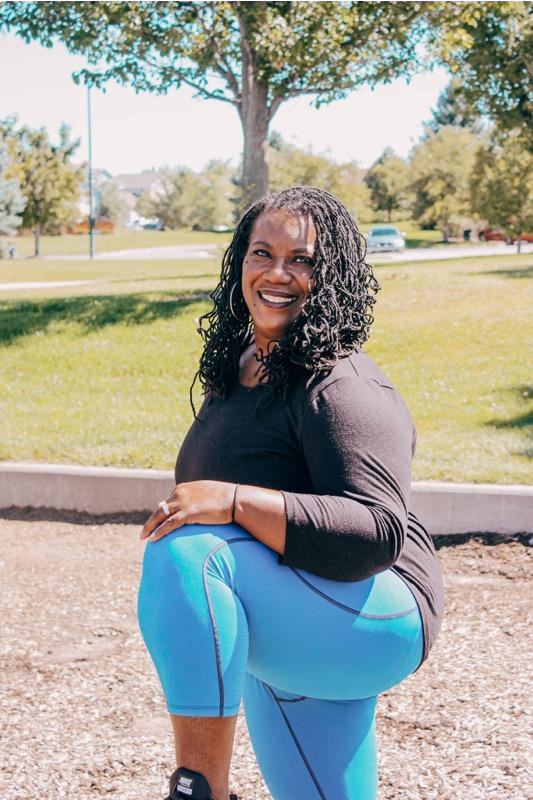
Our mission at Prickly Pear Sports is to give active women – and women who long to be active again – a way to run (jump, laugh, lift, sneeze) with confidence. without distraction, and without fear of embarrassing bladder leaks caused by SUI.

When I began my entrepreneurial journey, my primary interest was to address a problem that up to 50% of women deal with – we accidentally pee when we run (or sneeze, laugh, or jump – you name it.) This is called stress urinary incontinence, or SUI, and typically shows up during pregnancy, postpartum, or after menopause. As an avid sprint triathlete, I was struggling during my training runs. I couldn’t run a lap around the track without soaking my shorts, and the embarrassment was enough to make me think about quitting. I tried everything on the market, and nothing met my expectations. I wanted a washable (not disposable) product geared toward athletic women. Something that actually absorbed and concealed urine leaks so I could continue to train with confidence.

Just because SUI is common, it is not normal, and up to 20% of women who suffer from it drop out of physical activity altogether. Because of the embarrassment, they are reluctant to address it, waiting an average of 7 years before they even broach the subject with their doctors. Pricky Pear Sports is out to change that! We encourage women to seek treatment from a pelvic floor physical therapist or urogynecologist and to stay active (and look great!) while they’re at it. That’s the story behind our mission.

Awesome – so before we get into the rest of our questions, can you briefly introduce yourself to our readers.

In 1976, I embarked on my first long distance bicycle tour – a 4300-mile cross-country journey from Virginia to Oregon. It was an experience of a lifetime. At the end of the tour, I settled in Boulder, CO, and then “life” happened: graduate school, marriage, kids, and a long career in healthcare administration. I was in my early 50’s when my daughter talked me into doing a sprint triathlon, a women-only fundraiser for breast cancer research. “How hard could this be?”, I thought. After all, I used to bike much longer distances. Well, it was humiliatingly hard. I got through the swim and the bike legs okay, but I could barely make it through the run. Undaunted, I vowed to return the following year and to actually train in the meantime. I did much better, and found I had caught the sprint triathlon bug and was hooked!

As I began to train more seriously, I started experiencing annoying bladder leaks. But rather than give up, I started researching what other women were doing about it. Surely there must be an effective solution out there! I tried everything. Disposable pads (a non-starter), washable incontinence underwear (better, but too bulky), and athletic wear with those tiny patches of terry cloth in the crotch that totally miss the mark!

I continued to complain about it until one day my daughter said, “Mom! How about you do something about it?”

“Huh”, I thought, “do you think I could?” I had recently retired, had the time, and was looking for something challenging to do with this new chapter of my life. So yes, I was sure I could.

I tried to sew up a prototype myself but that didn’t exactly go well. Thankfully, I found someone locally who had commercial sewing experience. Since I knew nothing about the industry I was about to get into, she advised me to attend a trade show to learn about fabric types and suppliers, manufacturers, and other aspects of production. I left with my head spinning. Fortunately, I also left with the contact information for Frances Harder, industry expert and owner of Fashion For Profit, whose seminars I had attended. Back in Boulder, I realized that I needed more expertise than I had on hand, so I called Frances and asked for her help. I flew out to LA with my early prototypes. She gently suggested I should start over, and referred me to a designer/manufacturer who worked with start-ups. After a few short weeks, I had prototypes for running shorts and leggings that I was confident my prototype testers would like. They did, and Prickly Pear Sports was launched!

I’m proud of having entered an industry I knew absolutely nothing about, meeting and accepting the advice and encouragement from people who took me under their collective wings (thank you Frances Harder and Carlo Gholami), and turning it into a product that will help women reclaim their love of physical activity. Prickly Pear Sports isn’t just a product company. Our mission is to give women a way to return to sport with confidence, without embarrassment, and without fear.

Are there any books, videos or other content that you feel have meaningfully impacted your thinking?

As a “solopreneur”, I rely on the experience and expertise of people who have “been there, done that” to overcome obstacles, whether those are self-imposed (like procrastination) or externally driven (like COVID). The one book I return to when I’m stuck is How I Built This: The Unexpected Paths To Success From the World’s Most Inspiring Entrepreneurs by Guy Roz. He dedicates his book to “builders and those dreaming of building”. It is not a how-to book, but one filled with the stories, struggles, successes, and failures of entrepreneurs who have persevered while pursuing their dreams. At the end of each reading, I feel validated, hopeful, and proud of what I’ve accomplished.

How about pivoting – can you share the story of a time you’ve had to pivot?

Stress urinary incontinence (SUI) is very common among women across the age and fitness spectrum, so I figured I’d find clients where active women hang out – at my local running

store, CrossFit studio, triathlon club, or gym. I first approached local running stores to see if they would help me promote my apparel. Although all of them thought my shorts and leggings were brilliant and needed, none of them were willing to give me shelf space. The

reason? They weren’t in the business of selling an “incontinence product”. And I thought I was in the women’s health and fitness business!

Through the marvels of social media, I connected with a woman who is a pelvic floor physical therapist. I never knew there was such a discipline, so I reached out to her for more information. I discovered that, while individual women weren’t talking about SUI on social media, pelvic floor PTs certainly were! One thing led to another, and Prickly Pear Sports started sponsoring pelvic floor PT/OT conferences. I have partnered with Kate Weed, a local pelvic floor PT, to talk to women’s groups about how physical therapists can address the underlying cause of SUI, and Prickly Pear Sports can help women stay active while they’re getting treatment. It’s a great partnership and a more consistent source of referrals and new customers.

Categories
Blogs

Winter Business Attire

How much does your wardrobe change when the weather gets colder? Many business professionals have two wardrobes: office clothing for the warmer months and office clothing for the winter season. As the seasonal changes are setting in, it’s time to evaluate your cold weather styles and see if any updates are needed for your winter wardrobe this year.

Cold Weather Styles You’ll Love

Here are a few of the trendiest cold-weather styles we’re going to see in the office this winter:

  1. Straight-Leg Pants & a Stylish Sweater: All men and women need a classic pair of straight-leg slacks. These pants can be paired in many different combinations. Choose a neutral color like black or navy, then have a variety of cute tops you can rotate through. Add a bit of jewelry and a few shoe options, and you can create endless combinations.
  2. Wide-Leg Trousers and a Long Jacket: Have you noticed that the wide-leg look is coming back into style? This cut is a relaxed fit and helps to elongate the appearance of the legs. Finish the outfit with a button-up collared shirt and a long, stylish jacket. Both men and women should have at least 1 mid-thigh or knee-length jacket in their wardrobes.
  3. Knee Length Dress and Tall Boots: Women: just because the weather is getting cold doesn’t mean that your dresses must be stored away. Often, summer dresses can be layered with other clothing to create a classic style. Add a sweater over the dress. Put on a pair of cute tights and use knee-length boots to keep your legs warm.
  4. Suit and Leather Shoes: This classic combination will never go out of style for men. If you are heading to an important meeting, dress the part by wearing a fitted suit. The right pair of leather shoes will make the outfit “pop” and show your clients or colleagues that you are a professional.

Even though professional office clothing can be an investment, building a comfortable and stylish closet is worth the cost. When you have the right clothing, it sets your mindset to be more productive and effective in everything that you are doing throughout the workday.

 –Written by Becki Andrus in partnership with designer furniture retailer Bauhaus 2 Your House